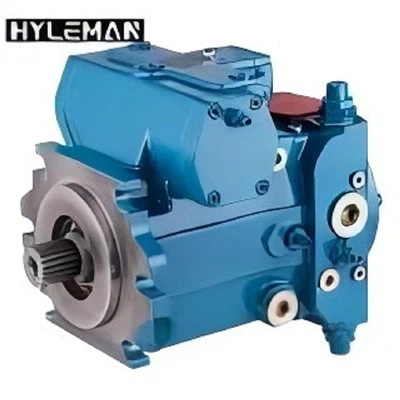
As a supplier of double vane pumps, I've witnessed firsthand the intricacies and challenges that come with the development of these essential hydraulic components. Double vane pumps are widely used in various industrial applications due to their efficiency, reliability, and ability to provide high-pressure hydraulic power. However, like any technology, they face several challenges that need to be addressed to ensure their continued improvement and performance.
1. Wear and Tear
One of the primary challenges in the development of double vane pumps is wear and tear. The vanes, which are the heart of the pump, are constantly in contact with the cam ring and the rotor. This continuous friction can lead to significant wear over time, reducing the pump's efficiency and lifespan. The wear can also cause leaks, which can lead to a loss of hydraulic pressure and a decrease in the overall performance of the system.
To mitigate this issue, manufacturers are constantly researching and developing new materials and surface treatments for the vanes and other components. For example, some manufacturers are using advanced ceramics and composite materials that offer better wear resistance than traditional materials. Additionally, surface treatments such as hardening and coating can help to reduce friction and increase the lifespan of the components.
2. Noise and Vibration
Another challenge in the development of double vane pumps is noise and vibration. Double vane pumps can generate a significant amount of noise and vibration during operation, which can be a nuisance in industrial environments. The noise and vibration can also be a sign of underlying problems with the pump, such as misalignment or wear.
To reduce noise and vibration, manufacturers are implementing various design and engineering solutions. For example, some pumps are designed with special damping materials and isolation mounts to absorb and reduce vibrations. Additionally, advanced hydraulic circuit design can help to minimize pressure fluctuations and reduce the noise generated by the pump.
3. Efficiency and Energy Consumption
Efficiency and energy consumption are also major challenges in the development of double vane pumps. As energy costs continue to rise, there is a growing demand for more energy-efficient pumps. Double vane pumps need to be designed to operate at high efficiency to reduce energy consumption and lower operating costs.
To improve efficiency, manufacturers are focusing on optimizing the pump's design and reducing internal leakage. For example, some pumps are designed with advanced sealing technologies to minimize leakage and improve volumetric efficiency. Additionally, the use of variable displacement pumps can help to match the pump's output to the system's demand, reducing energy consumption.
4. Contamination and Filtration
Contamination is a significant challenge in the operation of double vane pumps. Hydraulic systems are often exposed to various contaminants, such as dirt, dust, and metal particles, which can cause damage to the pump's components. Contamination can also lead to increased wear and reduced performance.
To address this issue, manufacturers are emphasizing the importance of proper filtration and maintenance. Double vane pumps are often equipped with high-quality filters to remove contaminants from the hydraulic fluid. Additionally, regular maintenance and fluid analysis can help to detect and prevent contamination issues before they cause significant damage to the pump.


5. Compatibility and Integration
Double vane pumps need to be compatible with a wide range of hydraulic systems and components. This requires careful consideration of factors such as pressure, flow rate, and fluid compatibility. Ensuring compatibility and seamless integration can be a challenge, especially when working with complex hydraulic systems.
Manufacturers are working to develop pumps that are more versatile and compatible with different hydraulic systems. They are also providing detailed technical specifications and support to help customers select the right pump for their specific applications. For example, the Yuken Double Vane Pumps PV2r24 and Double Pump Vickers 3525vq Vane Pump are designed to be highly compatible with a variety of hydraulic systems, offering reliable performance and easy integration.
6. Technological Advancements and Innovation
The hydraulic industry is constantly evolving, and double vane pump manufacturers need to keep up with the latest technological advancements and innovation. New materials, manufacturing processes, and control technologies are emerging, which can offer significant improvements in pump performance and efficiency.
Manufacturers are investing in research and development to incorporate these new technologies into their products. For example, the use of smart sensors and control systems can help to optimize pump performance and provide real-time monitoring and diagnostics. The Eaton Vane Pump Vtm42 Series Oil Pump China Factory is an example of a pump that incorporates advanced technologies to offer high performance and efficiency.
7. Cost and Market Competition
Cost is always a significant factor in the development and production of double vane pumps. Manufacturers need to balance the cost of materials, manufacturing, and research and development while remaining competitive in the market. The increasing competition in the hydraulic pump market puts pressure on manufacturers to offer high-quality products at competitive prices.
To address this challenge, manufacturers are looking for ways to optimize their production processes and reduce costs. This includes using more efficient manufacturing techniques, sourcing materials from cost-effective suppliers, and streamlining their supply chain. Additionally, manufacturers are focusing on providing value-added services and support to differentiate their products from competitors.
Conclusion
The development of double vane pumps faces several challenges, including wear and tear, noise and vibration, efficiency and energy consumption, contamination and filtration, compatibility and integration, technological advancements, and cost and market competition. However, with continuous research, innovation, and investment, manufacturers are making significant progress in overcoming these challenges and improving the performance and reliability of double vane pumps.
If you are in the market for double vane pumps, we invite you to contact us to discuss your specific requirements. Our team of experts can provide you with detailed information and support to help you select the right pump for your application. We are committed to providing high-quality products and excellent customer service to meet your needs.
References
- Hydraulic Pumps: Theory, Design, and Application by John F. Flanigan
- Fluid Power Technology by Robert L. Mott
- Handbook of Hydraulic Power Systems by Michael W. Johnson