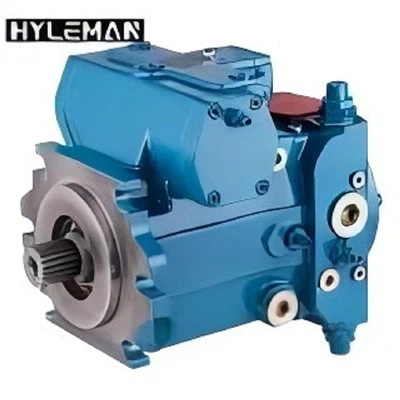
How does a piston pump operate under high - pressure conditions?
Piston pumps are essential components in various industrial applications, especially when high - pressure fluid delivery is required. As a piston pump supplier, I have witnessed firsthand the remarkable performance of these pumps under extreme pressure conditions. In this blog, I will delve into the working principles of piston pumps under high - pressure scenarios, exploring the key factors that enable them to function effectively.
Basic Working Principle of Piston Pumps
At its core, a piston pump operates on the principle of reciprocating motion. The pump consists of one or more pistons that move back and forth within cylinders. When the piston moves in one direction (usually the suction stroke), it creates a low - pressure area within the cylinder. This low - pressure area allows fluid to enter the cylinder through an inlet valve. As the piston reverses its direction (the discharge stroke), it compresses the fluid, increasing the pressure and forcing it out through an outlet valve.
In high - pressure applications, the design and materials of the piston pump play a crucial role. The pistons and cylinders must be made of high - strength materials to withstand the extreme forces generated during operation. For example, hardened steel or ceramic materials are often used for pistons and cylinders to resist wear and deformation under high - pressure conditions.
Key Components and Their Functions
- Pistons and Cylinders: The pistons are the moving parts that create the pressure changes within the pump. They are precisely machined to fit snugly within the cylinders, minimizing leakage and ensuring efficient operation. The cylinders provide a sealed chamber for the pistons to move, and their smooth inner surfaces reduce friction and wear.
- Valves: Inlet and outlet valves are critical for controlling the flow of fluid in and out of the cylinders. These valves must be designed to open and close quickly and accurately to prevent backflow and ensure efficient pumping. High - pressure applications often require valves made of durable materials such as stainless steel or tungsten carbide to withstand the high - pressure differentials.
- Drive Mechanism: The drive mechanism is responsible for converting the rotational motion of the motor or engine into the reciprocating motion of the pistons. Common drive mechanisms include crankshafts, swash plates, and camshafts. The design of the drive mechanism affects the pump's efficiency, flow rate, and pressure capabilities.
Operation Under High - Pressure Conditions
When a piston pump operates under high - pressure conditions, several factors come into play to ensure its proper functioning.


- Sealing: Effective sealing is essential to prevent fluid leakage and maintain high - pressure levels. The seals used in piston pumps must be able to withstand the high - pressure differentials and the abrasive nature of the fluid being pumped. Specialized seals made of materials such as PTFE (polytetrafluoroethylene) or elastomers are commonly used to provide a reliable seal.
- Lubrication: Lubrication is crucial to reduce friction and wear between the moving parts of the pump. In high - pressure applications, the lubricant must be able to withstand the high - pressure and high - temperature conditions. Synthetic lubricants are often used because they offer better performance and durability compared to traditional mineral - based lubricants.
- Pressure Regulation: To ensure safe and efficient operation, piston pumps are often equipped with pressure regulation systems. These systems monitor the pressure within the pump and adjust the flow rate or pressure as needed. Pressure relief valves are commonly used to prevent over - pressurization and protect the pump from damage.
Applications of High - Pressure Piston Pumps
High - pressure piston pumps are used in a wide range of industries, including oil and gas, manufacturing, and construction.
- Oil and Gas Industry: In the oil and gas industry, piston pumps are used for well - stimulation, hydraulic fracturing, and pipeline cleaning. These pumps are capable of delivering high - pressure fluids over long distances, making them essential for extracting oil and gas from deep - sea wells and shale formations.
- Manufacturing Industry: In the manufacturing industry, piston pumps are used for applications such as injection molding, metal forming, and high - pressure cleaning. They can provide the precise and consistent pressure required for these processes, ensuring high - quality products.
- Construction Industry: In the construction industry, piston pumps are used for concrete pumping, grouting, and hydro - excavation. These pumps can handle high - viscosity fluids and deliver them at high pressures, making them ideal for large - scale construction projects.
Our Product Offerings
As a piston pump supplier, we offer a wide range of high - quality piston pumps and spare parts to meet the diverse needs of our customers. Some of our popular products include:
- M2X63/96/120/146/150/170/210 Hydraulic Kawasaki Swing Motor Pump Parts: These parts are designed to fit Kawasaki swing motor pumps and provide reliable performance under high - pressure conditions.
- Servo Internal Pumps Hg Pghseries: Our servo internal pumps are known for their high precision and efficiency, making them suitable for applications that require accurate control of fluid flow and pressure.
- Parker PV PV020 PV023 PV028 Variable Displacement Axial Piston Pump Plunger Pump Hydraulic Pump For Excavator: These pumps are specifically designed for excavators and other heavy - equipment applications, offering high - pressure performance and durability.
Conclusion
In conclusion, piston pumps are highly versatile and reliable devices that can operate effectively under high - pressure conditions. By understanding the basic working principles, key components, and factors that affect their performance, we can ensure the proper selection and operation of piston pumps in various applications. As a piston pump supplier, we are committed to providing our customers with high - quality products and excellent service. If you are interested in learning more about our piston pumps or have any questions regarding their operation under high - pressure conditions, please feel free to contact us for a procurement discussion.
References
- "Hydraulic Pumps and Motors: Fundamentals, Applications, and Design" by Heinz P. Bloch
- "Fluid Power Engineering" by Anthony Esposito