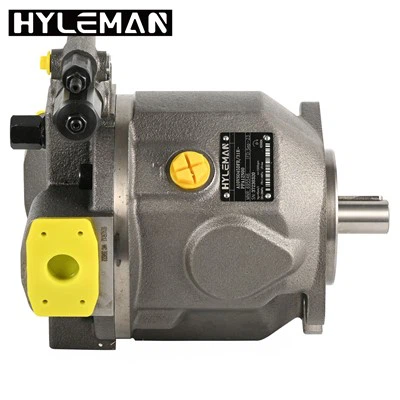
As a supplier of radial piston motors, I often encounter questions from customers about various technical aspects of these motors. One of the frequently asked questions is, "What is the minimum displacement of a radial piston motor?" In this blog post, I will delve into this topic, exploring the concept of minimum displacement, its significance, and how it relates to the performance of radial piston motors.
Understanding Radial Piston Motors
Before we discuss the minimum displacement, let's briefly understand what radial piston motors are. Radial piston motors are a type of hydraulic motor that converts hydraulic energy into mechanical energy. They are known for their high torque output, smooth operation, and high efficiency, making them suitable for a wide range of applications, including construction equipment, agricultural machinery, and industrial automation.
The basic structure of a radial piston motor consists of a housing, a cylinder block, pistons, and a cam ring. The hydraulic fluid enters the motor through the inlet port and acts on the pistons, causing them to move radially. This radial movement of the pistons is then converted into rotational motion by the cam ring, which drives the output shaft of the motor.
What is Displacement in a Radial Piston Motor?
Displacement in a radial piston motor refers to the volume of hydraulic fluid that the motor can displace in one revolution of the output shaft. It is typically measured in cubic centimeters per revolution (cc/rev) or cubic inches per revolution (in³/rev). The displacement of a radial piston motor determines its torque output and speed characteristics.
A higher displacement motor can produce more torque at a given pressure, but it will also operate at a lower speed. Conversely, a lower displacement motor can operate at a higher speed but will produce less torque. Therefore, the displacement of a radial piston motor needs to be carefully selected based on the specific requirements of the application.


The Concept of Minimum Displacement
The minimum displacement of a radial piston motor is the smallest volume of hydraulic fluid that the motor can displace in one revolution of the output shaft. It represents the lower limit of the motor's displacement range. The minimum displacement is an important parameter because it determines the motor's ability to operate at low speeds and produce low torque.
In some applications, such as precision positioning or low-speed operation, a motor with a low minimum displacement is required. For example, in a robotic arm, the motor needs to be able to move the arm slowly and precisely, which requires a motor with a low minimum displacement.
Factors Affecting the Minimum Displacement
Several factors can affect the minimum displacement of a radial piston motor. These factors include the design of the motor, the size of the pistons, the number of pistons, and the operating pressure.
- Motor Design: The design of the motor plays a crucial role in determining its minimum displacement. A well-designed motor can achieve a lower minimum displacement by optimizing the internal geometry and reducing the internal leakage.
- Piston Size: The size of the pistons also affects the minimum displacement. Smaller pistons can result in a lower minimum displacement because they require less hydraulic fluid to move.
- Number of Pistons: The number of pistons in the motor can also influence the minimum displacement. A motor with a larger number of pistons can achieve a lower minimum displacement because the total volume of the pistons is distributed over a larger number of cylinders.
- Operating Pressure: The operating pressure of the motor can also affect the minimum displacement. Higher operating pressures can increase the minimum displacement because they require more hydraulic fluid to move the pistons.
Significance of the Minimum Displacement
The minimum displacement of a radial piston motor is significant for several reasons. Firstly, it determines the motor's ability to operate at low speeds and produce low torque. This is important in applications where precise control and low-speed operation are required.
Secondly, the minimum displacement affects the motor's efficiency. A motor with a lower minimum displacement can operate more efficiently at low speeds because it requires less hydraulic fluid to move. This can result in energy savings and reduced operating costs.
Finally, the minimum displacement can also affect the motor's durability. A motor that operates at its minimum displacement for extended periods of time may experience less wear and tear, which can increase its lifespan.
Examples of Radial Piston Motors with Different Minimum Displacements
There are many different types of radial piston motors available on the market, each with its own minimum displacement. Here are some examples of radial piston motors and their minimum displacements:
- Poclain Piston Motor: Poclain piston motors are known for their high performance and reliability. They offer a wide range of minimum displacements, from as low as 10 cc/rev to as high as 1000 cc/rev.
- Intermot Nhm1/Nhm2/Nhm3 Series Dm3 Five Star Radial Piston Motor: The Intermot Nhm1/Nhm2/Nhm3 series Dm3 five star radial piston motors are designed for high torque applications. They have a minimum displacement of 25 cc/rev.
- Poclainn Inner Five Star Hydraulic Piston Motor: The Poclainn inner five star hydraulic piston motor is a compact and efficient motor. It has a minimum displacement of 15 cc/rev.
Choosing the Right Radial Piston Motor
When choosing a radial piston motor, it is important to consider the minimum displacement along with other factors such as torque output, speed, efficiency, and durability. Here are some tips to help you choose the right radial piston motor for your application:
- Understand Your Application Requirements: Before choosing a motor, you need to understand the specific requirements of your application. This includes the required torque, speed, and operating conditions.
- Consider the Minimum Displacement: The minimum displacement of the motor should be chosen based on the lowest speed and torque requirements of your application. A motor with a lower minimum displacement may be more suitable for applications that require low-speed operation.
- Evaluate the Motor's Performance: In addition to the minimum displacement, you should also evaluate the motor's performance in terms of torque output, speed, efficiency, and durability. Look for motors that have a high torque-to-displacement ratio and a low internal leakage.
- Choose a Reputable Supplier: Finally, it is important to choose a reputable supplier who can provide you with high-quality radial piston motors and excellent customer support.
Conclusion
In conclusion, the minimum displacement of a radial piston motor is an important parameter that determines the motor's ability to operate at low speeds and produce low torque. It is affected by several factors, including the design of the motor, the size of the pistons, the number of pistons, and the operating pressure. When choosing a radial piston motor, it is important to consider the minimum displacement along with other factors such as torque output, speed, efficiency, and durability.
If you are in the market for a radial piston motor, we invite you to contact us for more information. Our team of experts can help you choose the right motor for your application and provide you with the support you need to ensure its successful operation.
References
- Hydraulic Motors: Principles, Selection, and Application, by Heinz Bloch and Fred K. Geitner
- Fluid Power with Applications, by Donald C. Plummer, Michael J. Trepp, and Michael K. Rider