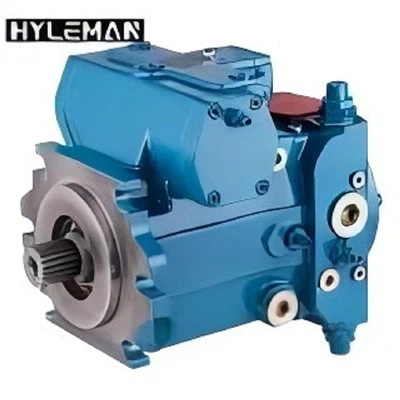
Hey there! As an axial piston motor supplier, I've seen my fair share of issues with these motors. Axial piston motors are crucial components in many hydraulic systems, powering everything from heavy machinery to industrial equipment. But like any mechanical device, they can run into problems. In this blog, I'll walk you through how to troubleshoot an axial piston motor.
Understanding the Basics of Axial Piston Motors
Before we dive into troubleshooting, let's quickly go over how axial piston motors work. Axial piston motors use a set of pistons arranged in a circular pattern around a central shaft. These pistons are driven by hydraulic fluid pressure, which causes the shaft to rotate. The rotation of the shaft is then used to power the machinery.
There are two main types of axial piston motors: bent-axis and swashplate. Bent-axis motors have the pistons arranged at an angle to the drive shaft, while swashplate motors have the pistons arranged parallel to the drive shaft. Each type has its own advantages and disadvantages, but the basic troubleshooting principles are the same for both.
Common Problems and How to Troubleshoot Them
1. Low Output Torque
One of the most common issues with axial piston motors is low output torque. This can be caused by a variety of factors, including:
- Low hydraulic pressure: Check the hydraulic pump to make sure it's delivering the correct pressure. You can use a pressure gauge to measure the pressure at the motor inlet. If the pressure is too low, the motor won't be able to generate enough torque.
- Worn pistons or cylinders: Over time, the pistons and cylinders in the motor can wear out, causing a loss of efficiency. Inspect the pistons and cylinders for signs of wear, such as scoring or pitting. If they're worn, they may need to be replaced.
- Leaking seals: Leaking seals can cause a loss of hydraulic fluid, which can lead to low pressure and reduced torque. Check the seals around the motor for signs of leakage, and replace any that are damaged.
2. Overheating
Another common problem is overheating. Overheating can be caused by a variety of factors, including:
- Excessive load: If the motor is being asked to do more work than it's designed for, it can overheat. Make sure the motor is properly sized for the application.
- Lack of lubrication: Axial piston motors require proper lubrication to operate smoothly. If the lubrication is insufficient, the motor can overheat. Check the oil level and quality, and make sure the oil is being circulated properly.
- Blocked cooling system: If the cooling system is blocked, the motor won't be able to dissipate heat effectively. Check the cooling fins and radiator for any blockages, and clean them if necessary.
3. Noise and Vibration
Noise and vibration can be a sign of a serious problem with the motor. Some possible causes include:
- Misaligned components: If the motor is not properly aligned with the driven equipment, it can cause noise and vibration. Check the alignment of the motor and the driven equipment, and make any necessary adjustments.
- Worn bearings: Worn bearings can cause noise and vibration. Inspect the bearings for signs of wear, such as excessive play or roughness. If they're worn, they may need to be replaced.
- Loose or damaged parts: Loose or damaged parts can also cause noise and vibration. Check all the bolts and connections on the motor, and tighten or replace any that are loose or damaged.
Using Diagnostic Tools
In addition to visual inspections, there are several diagnostic tools that can be used to troubleshoot axial piston motors. Some of these tools include:
- Pressure gauges: Pressure gauges can be used to measure the hydraulic pressure at various points in the system. This can help you identify any pressure drops or abnormalities.
- Flow meters: Flow meters can be used to measure the flow rate of the hydraulic fluid. This can help you determine if the motor is receiving enough fluid.
- Thermometers: Thermometers can be used to measure the temperature of the motor. This can help you identify any overheating issues.
Preventive Maintenance
The best way to avoid problems with axial piston motors is to perform regular preventive maintenance. Some preventive maintenance tasks include:
- Changing the oil: Regularly changing the hydraulic oil can help prevent wear and tear on the motor. Make sure to use the recommended oil for your motor.
- Inspecting the seals: Inspect the seals around the motor regularly for signs of leakage. Replace any seals that are damaged.
- Checking the alignment: Check the alignment of the motor and the driven equipment regularly. Make any necessary adjustments to ensure proper alignment.
Recommended Products
If you're in the market for an axial piston motor, we offer a wide range of high-quality products. For example, we have the Parker F11 Hydraulic Motor With Fixed Displacement, which is known for its reliability and performance. We also have the Axial Piston Pump R902406338, A A10vno 41 Dfr1/52r-HRC40n00 Es1005 and the Rexroth Hydraulic Bent Axial Piston Motor A2f107rz22. These products are designed to meet the needs of a variety of applications.


Contact Us for Purchase and Consultation
If you're experiencing problems with your axial piston motor or if you're interested in purchasing a new one, don't hesitate to contact us. Our team of experts is here to help you troubleshoot any issues and find the right motor for your needs. We offer competitive prices and excellent customer service. So, whether you're a small business or a large industrial operation, we can provide you with the solutions you need.
References
- Hydraulic Pneumatics Handbook, various editions.
- Manufacturer's manuals for axial piston motors.