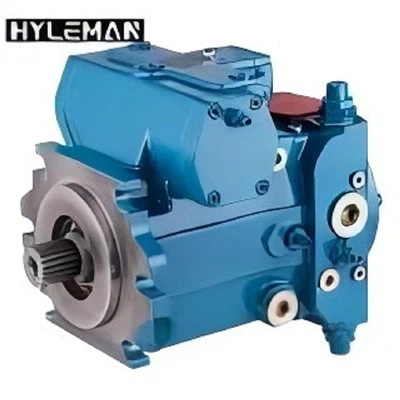
Hey there! As a supplier of variable piston pumps, I often get asked about the static performance parameters of these pumps. So, I thought I'd share some insights on this topic.
Flow Rate
The flow rate is one of the most important static performance parameters of a variable piston pump. It refers to the volume of fluid that the pump can deliver per unit of time. Flow rate is usually measured in liters per minute (L/min) or gallons per minute (GPM).
The flow rate of a variable piston pump can be adjusted according to the system's requirements. This is one of the key advantages of variable piston pumps over fixed - displacement pumps. For example, in a hydraulic system where the load varies, a variable piston pump can change its flow rate to match the demand, which helps in saving energy.
Let's say you have a hydraulic press. When the press is moving the ram down quickly, it needs a high flow rate. But when it's applying pressure to the workpiece, a lower flow rate might be sufficient. A variable piston pump can adjust its flow rate to meet these different requirements.
Pressure
Pressure is another crucial static performance parameter. It's the force per unit area exerted by the fluid in the pump. Pressure is typically measured in pascals (Pa), but more commonly in bars or pounds per square inch (psi).
A variable piston pump can generate high pressures. The maximum pressure that a pump can handle is an important specification. For instance, in heavy - duty industrial applications like mining or construction equipment, high - pressure pumps are required to perform tasks such as lifting heavy loads or breaking rocks.


However, it's important to note that the flow rate and pressure are interrelated. As the pressure increases, the flow rate may decrease, and vice versa. This relationship is described by the pump's performance curve.
Efficiency
Efficiency is a measure of how well the pump converts input power into useful output power. There are two main types of efficiency: volumetric efficiency and mechanical efficiency.
Volumetric efficiency takes into account the amount of fluid that actually gets delivered compared to the theoretical amount. Leakage within the pump can reduce the volumetric efficiency. For example, if there are worn seals or clearances in the pump, some of the fluid may leak back, resulting in a lower actual flow rate than the theoretical one.
Mechanical efficiency is related to the power losses due to friction within the pump. Components like pistons, cylinders, and bearings can cause frictional losses. A well - designed variable piston pump will have high mechanical efficiency, which means less energy is wasted as heat.
Displacement
Displacement refers to the volume of fluid displaced by the pump per revolution or per cycle. In a variable piston pump, the displacement can be changed. This is achieved by adjusting the angle of the swashplate (in some types of variable piston pumps).
A larger displacement means that the pump can deliver more fluid per revolution. For applications that require high flow rates, a pump with a larger displacement may be more suitable. On the other hand, for applications where precise control of the flow rate is needed, a pump with a variable displacement feature can be adjusted to provide the exact amount of fluid required.
Noise Level
Noise level is also an important static performance parameter, especially in applications where a quiet working environment is required. A noisy pump can be a nuisance and may also indicate problems such as cavitation or mechanical wear.
Variable piston pumps are designed to operate as quietly as possible. Manufacturers use various techniques to reduce noise, such as improving the design of the pump housing, using damping materials, and optimizing the flow path within the pump.
Rexroth and Parker Pumps
When it comes to variable piston pumps, two well - known brands are Rexroth and Parker. The Rexroth Hydraulic Plunger Pump is known for its high - quality construction and reliable performance. It's widely used in a variety of industrial applications.
The Parker PV Series PV02 PV016 PV020 PV040 PV046 PV063 PV071 PV080 PV092 PV140 PV180 offers a range of options with different displacements and performance characteristics. These pumps are popular in the market due to their versatility and durability.
If you need to replace a Parker PV series pump, the Replace Parker PV Series PV080 PV092 PV140 PV180 PV270 provides a suitable solution.
Why Choose Our Variable Piston Pumps
As a supplier, we offer variable piston pumps that meet high - quality standards. Our pumps are designed with the latest technology to ensure optimal performance, efficiency, and reliability. We understand the importance of the static performance parameters and make sure that our pumps are carefully engineered to meet the specific needs of our customers.
Whether you need a pump for a small - scale application or a large - scale industrial project, we have the right solution for you. Our team of experts can provide you with detailed information about the pumps and help you choose the one that best suits your requirements.
Let's Talk
If you're interested in purchasing variable piston pumps or have any questions about the static performance parameters, don't hesitate to get in touch. We're here to assist you in finding the perfect pump for your application. Whether it's for a new project or a replacement, we can offer you the best products and services.
References
- Fluid Power Handbook, various editions
- Technical manuals of Rexroth and Parker variable piston pumps