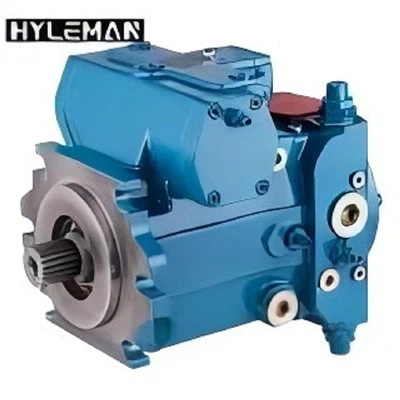
Hey there! As a supplier of Servo Hydraulic Pumps, I often get asked about the control accuracy of these nifty devices. So, let's dive right into it and explore what control accuracy really means in the context of servo hydraulic pumps.


First off, control accuracy refers to how precisely a servo hydraulic pump can deliver the desired flow rate and pressure. It's all about hitting the mark every single time, no matter the operating conditions. In a nutshell, a pump with high control accuracy can maintain a consistent output, which is crucial for a wide range of applications, from industrial machinery to aerospace systems.
One of the key factors that determine the control accuracy of a servo hydraulic pump is its feedback system. This system continuously monitors the pump's output and compares it to the desired setpoint. If there's any deviation, the feedback system sends a signal to the pump's controller, which then adjusts the pump's operation to bring the output back in line. This closed-loop control mechanism ensures that the pump can adapt to changes in load, temperature, and other factors, maintaining a high level of accuracy.
Another important aspect of control accuracy is the pump's response time. A fast response time means that the pump can quickly adjust its output in response to changes in demand. This is especially important in applications where precise control is required, such as in robotic systems or high-speed manufacturing processes. A pump with a slow response time may not be able to keep up with rapid changes in demand, leading to inaccurate output and potential performance issues.
Now, let's talk about the different types of servo hydraulic pumps and how their control accuracy can vary. There are several types of servo hydraulic pumps available on the market, each with its own unique features and capabilities.
One popular type is the Servo Pump Motor. These pumps are known for their high efficiency and precise control. They use a servo motor to drive the pump, which allows for accurate control of the pump's speed and torque. This, in turn, enables precise control of the flow rate and pressure. Servo pump motors are often used in applications where high precision and energy efficiency are required, such as in machine tools and injection molding machines.
Another type of servo hydraulic pump is the Sumitomo Servo Internal Gear Pump Qt Series. These pumps are designed for high-pressure applications and offer excellent control accuracy. They use an internal gear design, which provides a smooth and consistent flow of fluid. The Qt series pumps are known for their reliability and durability, making them a popular choice in industries such as automotive and aerospace.
The Vg Series Servo Combied Press Pump is another option for those looking for high control accuracy. These pumps are specifically designed for press applications and offer precise control of the pressure and flow rate. They use a combination of servo technology and hydraulic power to provide a high level of performance and efficiency. The Vg series pumps are often used in metal forming and stamping applications, where precise control is essential for achieving high-quality results.
So, how can you ensure that you're getting the best control accuracy from your servo hydraulic pump? Here are a few tips:
- Choose the right pump for your application: Different applications have different requirements, so it's important to choose a pump that is specifically designed for your needs. Consider factors such as the required flow rate, pressure, and response time when selecting a pump.
- Use a high-quality feedback system: A reliable feedback system is essential for maintaining control accuracy. Make sure that the pump you choose is equipped with a high-quality feedback system that can accurately monitor the pump's output and make adjustments as needed.
- Regular maintenance: Like any other piece of equipment, servo hydraulic pumps require regular maintenance to ensure optimal performance. This includes checking the fluid levels, inspecting the seals and hoses, and performing any necessary repairs or replacements.
- Training and support: Make sure that your operators are properly trained on how to use and maintain the servo hydraulic pump. Additionally, choose a supplier that offers comprehensive support and training to help you get the most out of your pump.
In conclusion, the control accuracy of a servo hydraulic pump is a critical factor in ensuring the performance and reliability of your equipment. By understanding the key factors that affect control accuracy and choosing the right pump for your application, you can ensure that your system operates at its best. If you're in the market for a servo hydraulic pump, I encourage you to reach out to us to discuss your specific needs. We're here to help you find the perfect pump for your application and provide you with the support and training you need to get the most out of it.
References:
- "Hydraulic Systems and Components" by John F. Watton
- "Servo Hydraulic Systems" by Peter C. Hughes