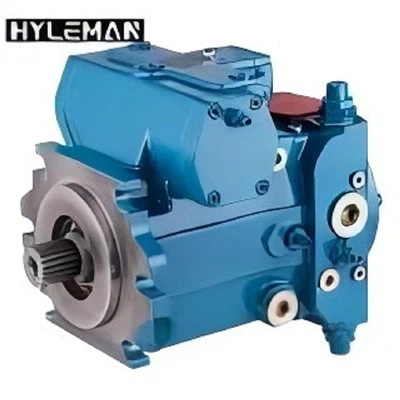
What is the function of the drive shaft in a radial piston pump?
In the realm of hydraulic systems, radial piston pumps stand as a cornerstone for various industrial applications. As a dedicated supplier of Radial Piston Pumps, I have witnessed firsthand the significance of each component within these pumps. Among them, the drive shaft plays a pivotal role in the overall operation of a radial piston pump.
1. Power Transmission
The primary function of the drive shaft in a radial piston pump is to transmit power from the prime mover, such as an electric motor or an internal combustion engine, to the pump's internal components. When the prime mover rotates, it imparts rotational motion to the drive shaft. This rotational energy is then transferred to the pistons within the pump, enabling them to perform their reciprocating motion.
The drive shaft acts as a mechanical link between the external power source and the pump's internal mechanism. It must be able to withstand the torque generated by the prime mover without experiencing excessive deformation or failure. High - quality materials, such as forged steel, are often used to manufacture drive shafts to ensure their strength and durability.
2. Synchronization of Piston Movement
In a radial piston pump, multiple pistons are arranged radially around a central axis. The drive shaft is responsible for synchronizing the movement of these pistons. As the drive shaft rotates, it causes the pistons to move in a coordinated manner, creating a continuous flow of hydraulic fluid.
Each piston has a specific stroke and timing, which is determined by the design of the pump and the shape of the cam or eccentric mechanism that the drive shaft interacts with. The drive shaft ensures that all pistons move in harmony, preventing any misalignment or uneven movement that could lead to inefficiencies or damage to the pump.
3. Load Distribution
The drive shaft also plays a crucial role in distributing the load evenly across the pump's internal components. As the pistons move, they generate forces that are transferred to the drive shaft. The drive shaft must be designed to handle these forces and distribute them evenly to other parts of the pump, such as the bearings and the housing.
Proper load distribution is essential for the long - term reliability and performance of the pump. If the load is not distributed evenly, it can cause excessive wear and tear on certain components, leading to premature failure. The drive shaft's design and construction are optimized to ensure that the forces generated by the pistons are spread out effectively.
4. Connection to the Pump's Control Mechanism
In some radial piston pumps, the drive shaft is also connected to the pump's control mechanism. This allows for the adjustment of the pump's output flow and pressure. For example, by changing the angle of the swash plate or the eccentric mechanism that the drive shaft interacts with, the displacement of the pistons can be altered, thereby controlling the flow rate of the hydraulic fluid.
The connection between the drive shaft and the control mechanism is carefully engineered to ensure precise and reliable operation. Any misalignment or malfunction in this connection can lead to inaccurate control of the pump's output, which can have a significant impact on the performance of the hydraulic system.
Comparison with Other Hydraulic Pumps
When comparing radial piston pumps with other types of hydraulic pumps, such as Rexroth Hydraulic Plunger Pump and Eaton Hydraulic Plunger Pump, the role of the drive shaft remains similar in terms of power transmission. However, the design and operation of the drive shaft may vary depending on the specific pump design.
In axial piston pumps, for example, the drive shaft is typically arranged parallel to the pistons, while in radial piston pumps, it is perpendicular to the pistons. This difference in arrangement affects the way the drive shaft transmits power and synchronizes the piston movement.


Importance in Industrial Applications
Radial piston pumps are widely used in various industrial applications, including machine tools, construction equipment, and aerospace systems. The proper functioning of the drive shaft is crucial for the reliable operation of these applications.
In machine tools, for example, a radial piston pump is used to provide high - pressure hydraulic fluid for the operation of hydraulic cylinders and other components. If the drive shaft fails, it can lead to a loss of hydraulic power, resulting in the malfunction of the machine tool.
In construction equipment, such as excavators and loaders, radial piston pumps are used to power the hydraulic systems that control the movement of the equipment. A faulty drive shaft can cause erratic movement or a complete loss of control, posing a safety risk to the operators.
Maintenance and Troubleshooting
To ensure the proper functioning of the drive shaft in a radial piston pump, regular maintenance is essential. This includes checking the drive shaft for signs of wear, such as excessive play or damage to the surface. Lubrication of the drive shaft and its associated components is also crucial to reduce friction and prevent premature wear.
If a problem is detected with the drive shaft, it is important to troubleshoot the issue promptly. Common problems with the drive shaft include misalignment, bearing failure, and excessive vibration. By identifying and addressing these issues early on, the lifespan of the drive shaft and the overall pump can be extended.
Conclusion
In conclusion, the drive shaft in a radial piston pump is a critical component that performs several important functions. It is responsible for power transmission, synchronization of piston movement, load distribution, and connection to the pump's control mechanism. Understanding the role of the drive shaft is essential for the proper operation, maintenance, and troubleshooting of radial piston pumps.
As a supplier of radial piston pumps, we are committed to providing high - quality products and technical support to our customers. If you are interested in purchasing radial piston pumps or have any questions about their operation, we encourage you to contact us for a detailed discussion. Our team of experts is ready to assist you in finding the right solution for your specific needs.
References
- "Hydraulic Pumps and Motors: Fundamentals, Design, and Applications" by John F. Watson
- "Fluid Power Technology" by Don Lancaster
- Technical manuals of radial piston pumps from various manufacturers