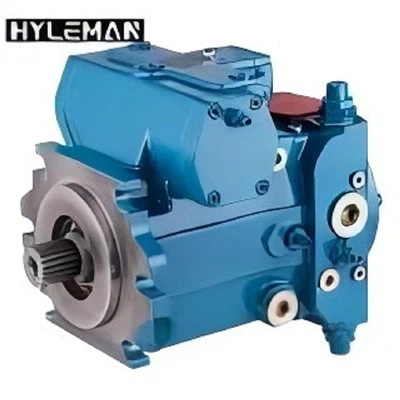
What testing methods are used for internal gear pumps? Well, as an internal gear pump supplier, I've got some hands - on experience to share with you. Internal gear pumps are crucial components in many industrial applications, from hydraulic systems to oil transfer. So, making sure they work properly is super important. Let's dig into the common testing methods used for these pumps.
Performance Testing
One of the first things we do is performance testing. This is all about checking how well the pump actually does its job. The most basic parameter we look at is the flow rate. The flow rate tells us how much fluid the pump can move in a given time. It's kind of like how fast water comes out of a hose.
To measure the flow rate, we use a flow meter. There are different types of flow meters available, like turbine flow meters and ultrasonic flow meters. Turbine flow meters are pretty common. They work by having a small turbine inside the flow path. As the fluid flows through, it spins the turbine, and the speed of the turbine is proportional to the flow rate. Ultrasonic flow meters, on the other hand, use ultrasonic waves to measure the flow. They're non - intrusive, which means they don't have to be directly in the fluid stream.
Another key performance parameter is the pressure. Pressure is like the force that pushes the fluid through the system. We measure the pressure at different points in the pump and the connected system using pressure gauges. A pressure gauge is a simple device that has a dial and a needle. The needle moves according to the pressure it senses.
In performance testing, we run the pump at different speeds and loads to see how it behaves under various conditions. This helps us map out the pump's performance curve. A performance curve shows how the flow rate, pressure, and power consumption of the pump are related to each other. By analyzing this curve, we can make sure the pump will perform as expected in different real - world scenarios.
If you're interested in high - quality pumps for your specific needs, check out Hydro Pumps. These pumps are built to meet various industrial requirements and have been thoroughly tested.
Leakage Testing
Leakage is a big no - no when it comes to internal gear pumps. Even a small leak can lead to a loss of efficiency, contamination of the surrounding environment, and potential safety hazards. So, we conduct leakage testing to ensure the pump is sealed properly.
One way to test for leakage is the pressure decay method. In this method, we first pressurize the pump and its connected system to a specific pressure. Then, we close off all the inlets and outlets and monitor the pressure over a period of time. If there's a leak, the pressure will drop. The rate of pressure drop can tell us how big the leak is.
Another method is the bubble test. This is a more visual way of detecting leaks. We dip the pump or the components that are suspected of leaking into a tank of soapy water and then pressurize the system. If there's a leak, bubbles will form at the leak point. It's a simple but effective way to find small leaks, especially in hard - to - reach areas.
Leakage testing is really important because it guarantees the reliability and safety of the pump. We don't want any surprises when the pump is in operation. And speaking of reliable pumps, our Gear Pumps For Oil are designed to have minimal leakage and provide long - term performance.
Vibration Testing
Vibration can be a sign of trouble in an internal gear pump. Excessive vibration can cause premature wear and tear of the pump components, as well as noise pollution. So, we do vibration testing to identify any potential problems early on.
We use vibration sensors to measure the vibration levels of the pump. These sensors are usually attached to the pump housing at different locations. The sensors detect the vibrations and convert them into electrical signals. These signals are then analyzed using specialized software.
The software can tell us a lot about the vibration. For example, it can show us the frequency of the vibration. Different frequencies can indicate different problems. A high - frequency vibration might be caused by a misaligned shaft, while a low - frequency vibration could be due to a problem with the gears.
By analyzing the vibration patterns, we can take preventive measures to fix the issues before they cause major damage. For example, if the vibration is due to misalignment, we can realign the shaft. This helps to extend the lifespan of the pump and reduce maintenance costs. Our Hydraulic Gear Oil Pump undergoes strict vibration testing to ensure smooth and reliable operation.
Noise Testing
Noise is another aspect we pay attention to. A noisy pump not only creates an unpleasant working environment but can also be a sign of internal problems. So, we conduct noise testing.
We use sound level meters to measure the noise produced by the pump. These meters are placed at a certain distance from the pump to get an accurate reading. We run the pump under normal operating conditions and record the noise levels.
The acceptable noise level for a pump depends on the application. In a quiet laboratory environment, a lower noise level is required compared to a noisy industrial setting. If the noise level is too high, we need to find out the cause. It could be due to gear meshing issues, cavitation, or a loose component.
Cavitation, in particular, is a phenomenon where vapor bubbles form in the fluid due to low pressure. When these bubbles collapse, they can create a lot of noise and damage the pump. By analyzing the noise pattern, we can detect cavitation early and take steps to prevent it.


Material Testing
The quality of the materials used in an internal gear pump is crucial for its performance and durability. So, we also conduct material testing.
We use various methods to test the materials. One common method is hardness testing. Hardness testing helps us determine how resistant the material is to deformation. A harder material is usually more resistant to wear and tear. There are different hardness testing methods, like the Rockwell hardness test and the Brinell hardness test.
We also do chemical analysis of the materials. This helps us ensure that the materials have the right composition. For example, the gears in an internal gear pump need to be made of a material that has good corrosion resistance and high strength. By analyzing the chemical composition, we can make sure the pump meets the required standards.
Conclusions and How to Connect
In conclusion, there are multiple testing methods used for internal gear pumps. From performance testing to material testing, each step is crucial to ensure that the pump is reliable, efficient, and safe. At our company, we take these testing procedures very seriously. Every pump that leaves our facility has gone through a rigorous testing process to meet the high - quality standards our customers expect.
If you're in the market for a reliable internal gear pump for your industrial applications, whether it's for hydro systems, oil transfer, or hydraulic operations, we'd love to talk to you. Our team of experts is ready to help you find the perfect pump for your needs. Just reach out, and let's start a conversation about how we can work together.
References
- Pumps Handbook (3rd Edition)
- Hydraulic Systems: Design and Applications