

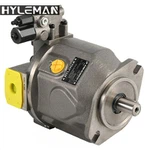
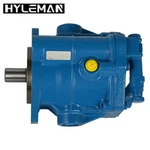

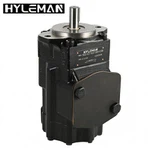
Servo Motor
Your Professional Servo Motor Supplier
Ningbo Hyleman Hydraulics Co., Ltd is a scientific and innovative company integrating R & D, production, sales and service of high-quality hydraulic pumps, motors, gear reducers and other hydraulic products.Hyleman mainly supply A10V, A4V, A4VG, A11V, A15V, A20V,A2FO,A2FM, A6VM, PV, PVP, PVAC, PVB, PVQ, PVH series piston pumps and motors ; T6,T7,V,VQ, M5A, M5B, M4C, M4D, M4E, 25M, 35M, 45M, 50M series vane pumps and motors;C101/102, G101/102, PGP/PGM, 30/31,50/51, 75/76 series gear pumps and motors.
Why choose us
QUALITY ASSURANCE
Through the honing and innovation of Hyleman people, Hyleman series products can not only perfectly replace the original products, but also realize the seamless exchange and connection of all the parts.
GOOD SERVICE
Hyleman are devoting to provide our clients with the best quality products, and the comprehensive solutions of hydraulics.
PRODUCT APPLICATION
Hyleman series products are widely used in engineering machinery, plastic machinery, metallurgical machinery, environmental sanitation machinery, mining machinery, marine machinery, packaging machinery, port machinery and various hydraulic equipment, which are highly praised by clients.
PRODUCT EXPORT
Through the honing and innovation of Hyleman people, Hyleman series products can not only perfectly replace the original products, but also realize the seamless exchange and connection of all the parts. Hyleman products have been exported to more than 70 countries and regions around the world.


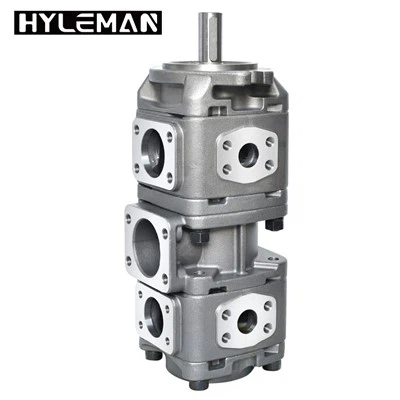


Benefits of Servo Motor
High Efficiency – Servo motors are highly efficient due to their ability to only draw power during the movement and maintain energy efficiency across different speeds and loads.
Exceptional Control Precision – They offer precise control of angular or linear position, speed, and acceleration, making them indispensable in applications where precise positioning is crucial.
High Output Power Relative to Size – Despite their small and compact size, servo motors can deliver a high power output, making them suitable for space-sensitive applications.
Rapid Response to Starting, Stopping, and Reversing – Servo motors can quickly respond to signals for starting, stopping, and reversing, enhancing the dynamics of motion control systems.
Low Maintenance – With fewer mechanical parts subject to wear (especially in brushless types), servo motors generally require less maintenance compared to traditional motors.
Integration with Sophisticated Control Systems – They seamlessly integrate with advanced digital control systems, allowing for complex algorithm implementations that improve system stability and performance.
High Torque at Low Speeds – Servo motors maintain consistent torque levels at low speeds, which is beneficial for applications requiring a high degree of control during slow speed operation.
Reduced Heat Generation – Modern servo motors are designed to minimize heat generation, which reduces the risk of overheating and extends the life of the motor and associated components.
Servo Motor Control

Servos are controlled by sending an electrical pulse of variable width, or pulse width modulation (PWM), through the control wire. There is a minimum pulse, a maximum pulse, and a repetition rate. A servo motor can usually only turn 90° in either direction for a total of 180° movement. The motor's neutral position is defined as the position where the servo has the same amount of potential rotation in both the clockwise or counter-clockwise direction. To better understand what a servo motor is, the PWM sent to the motor determines the position of the shaft, and based on the duration of the pulse sent via the control wire, the rotor will turn to the desired position. The servo motor expects to see a pulse every 20 milliseconds (ms), and the length of the pulse determines how far the motor turns. If you’re still wondering how does a servo motor work, here’s an example - a 1.5ms pulse will make the motor turn to the 90° position. Shorter than 1.5ms moves it in the counter-clockwise direction toward the 0° position, and any longer than 1.5ms will turn the servo in a clockwise direction toward the 180° position.

Servo Motor Construction
The servo motor consists of two winding stator and rotor windings. The stator winding is wound on the stationary part of the motor, and this winding is also called field winding of the motor. The rotor winding is wound on the rotating part of the motor and this winding is also called the armature winding of the motor. The motor consists of two bearings on the front and backside for the free movement of the shaft. The encoder has the approximate sensor for determining the rotational speed and revolution per minute of the motor. Our Motor Selection Guide will help you identify your requirements.

How a servo motor works
Modern servo motors are actuated by a servo controller – both together form the servo drive. With this combination, the motor can be operated with very dynamic movements, high effective torque and high power density. Due to the way it works, it is also particularly energy efficient and can achieve high nominal power with relatively small deviation. Costs are therefore saved on multiple levels, which are reflected in better economic efficiency of servo-assisted drive systems.
The greatest strength of the servo motor and the way it works, however, does not emerge until it interacts with the servo controller. Together, software-supported programming is possible, which ensures outstanding precision. Predefined torque, position and speed can be controlled with maximum precision and dynamically adapted to the required movement. Very complex machine processes can therefore be implemented.

The most common servo motor uses include:


Robotics: Servo motors are used to power robotic arms and grippers, like Standard Bot's ROI. The precision of a servo motor ensures that the robotic arm moves with accuracy.
Automated guided vehicles: Servo motors can control the wheels of robotic vehicles, especially those used in industrial or warehouse settings. The motors provide the required torque to move the robotic vehicle and achieve speed control.
Computer numerical control (CNC) machining: CNC machines have servo motors that control the position and speed of the cutting tools.
Conveyor systems: Servo motors are used to control the smooth operation of conveyors. They're crucial for tasks like packaging and labeling.
Hobbies: Many hobbyists make use of hobby servos for remote control cars, model airplanes, and small hobby robots.
Pharmaceuticals and food services: Servo motors are used in these environments where high pressure, temperatures, corrosive materials, and hygiene standards must be maintained.
Cameras: Cameras with an auto-focus feature use servo motors to position the lens.
Medical equipment: Servos are used in medical devices like MRI and CT scanners, and X-ray machines because of their precision. They're also used in robotic surgical systems where precise movements are crucial.
Textile industry: Servos are used to control the movement of looms and knitting machines.
Printing press: High-speed printing presses use servo motors to ensure high-quality printing and color control.
Telecommunication: Servos are used to accurately position antennas and satellite dishes used in telecommunications.
Renewable energy systems: Servos are used in wind turbines and also to move solar panels that automatically track the sun.
Virtual reality: Servo motors are used in flight simulators, driving simulators, and virtual reality systems to accurately translate controller movements to the system, enhancing user experience.
What sets us apart from other manufacturers is our extensive ability to optimize and customize our motors for your specific application needs. We can ensure that our motors are optimized to deliver the required performance for your specific application, whether it’s increasing torque at a specific speed range, reducing noise or vibration, or optimizing for minimal power consumption. We can customize the housing to match your application or replace an old motor.
Furthermore, we can create custom modifications to the motor’s lead wires and connectors, customized mounting brackets or motor housings for proper fit and alignment, or customized motor shafts with gears or pulleys to drive. Additionally, we can extend the motor’s capabilities with value-add components such as gearboxes, encoders, dampers, or custom electronics.

our factory


