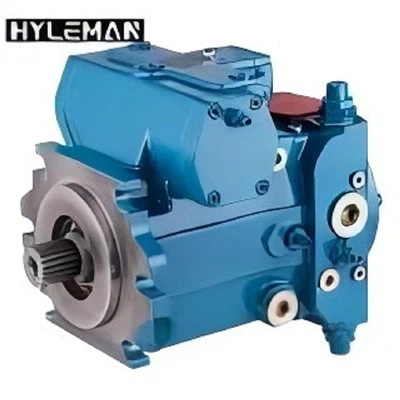
Can a variable piston pump work in a corrosive environment? Well, that's a question I get asked a lot as a variable piston pump supplier. In this blog, I'll dig into the details of whether these pumps can handle corrosive settings, the challenges they face, and what we can do to make them work.


Let's start with the basics. A variable piston pump is a key component in many hydraulic systems. It's designed to adjust the flow rate and pressure according to the needs of the system. These pumps are widely used in industries like construction, manufacturing, and agriculture. But when it comes to corrosive environments, things get a bit tricky.
Corrosive environments are those where there are substances that can eat away at the materials of the pump. This could be chemicals, saltwater, or even just a high - humidity atmosphere. The main problem with running a variable piston pump in such an environment is that corrosion can damage the pump's components. The pistons, cylinders, and valves are all at risk. If these parts corrode, it can lead to leaks, reduced efficiency, and eventually, pump failure.
One of the main factors that determine whether a variable piston pump can work in a corrosive environment is the material it's made of. Most standard variable piston pumps are made of metals like steel or aluminum. These metals are strong and durable, but they're also prone to corrosion. For example, steel can rust when exposed to moisture and oxygen, and aluminum can react with certain chemicals.
However, there are some solutions. One option is to use pumps made from corrosion - resistant materials. Stainless steel is a popular choice. It has a high resistance to corrosion because of the chromium in it. When exposed to oxygen, a thin layer of chromium oxide forms on the surface of the steel, protecting it from further corrosion. There are also pumps made from special alloys that are designed to withstand specific corrosive substances.
Another solution is to apply protective coatings to the pump. These coatings act as a barrier between the pump's components and the corrosive environment. There are different types of coatings available, such as epoxy coatings, which are known for their good adhesion and chemical resistance. Some coatings can also provide additional benefits like reducing friction, which can improve the pump's efficiency.
Now, let's talk about some of the specific variable piston pumps we offer. We have the Parker PV Series PV02 PV016 PV020 PV040 PV046 PV063 PV071 PV080 PV092 PV140 PV180. These pumps are well - known for their high performance and reliability. They can be customized to some extent to better handle corrosive environments. For example, we can use corrosion - resistant materials in the manufacturing process or apply special coatings.
We also have the Linde Hydraulic Plunger Pump. Linde pumps are designed with advanced technology and are known for their efficiency. In a corrosive environment, we can take steps to protect these pumps as well. We can work with you to select the right materials and coatings to ensure the pump's longevity.
And then there's the Parker Hydraulic Plunger Pump. Parker pumps are widely used in various industries. They have a reputation for quality, but in a corrosive environment, they need some extra care. We can offer solutions like using corrosion - resistant seals and gaskets to prevent leaks and protect the internal components.
Despite all these solutions, it's important to note that running a variable piston pump in a corrosive environment still has its challenges. Regular maintenance is crucial. You need to check the pump regularly for signs of corrosion, such as rust or pitting. If you notice any problems, you should address them immediately. This might involve replacing corroded parts or reapplying protective coatings.
Another thing to consider is the operating conditions. In a corrosive environment, the temperature and humidity can also affect the pump's performance. High temperatures can accelerate the corrosion process, and high humidity can increase the likelihood of moisture - related corrosion. So, it's important to monitor these conditions and take appropriate measures.
In conclusion, while it's possible for a variable piston pump to work in a corrosive environment, it requires careful consideration and proper measures. By using corrosion - resistant materials, applying protective coatings, and performing regular maintenance, we can make these pumps work effectively in challenging settings.
If you're in the market for a variable piston pump for a corrosive environment, or if you have any questions about our products, don't hesitate to reach out. We're here to help you find the best solution for your needs. Let's have a chat and see how we can work together to get the most out of your hydraulic system.
References:
- "Hydraulic Pumps: Principles, Types, and Applications" by John Smith
- "Corrosion Prevention in Industrial Equipment" by Jane Doe
- Manufacturer's manuals for Parker and Linde pumps