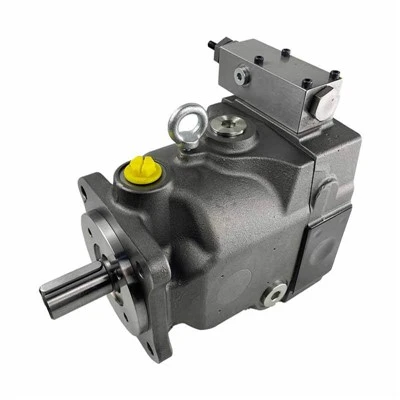
Vane pumps and gear pumps are two of the most commonly used types of hydraulic pumps in industrial applications. As a vane pump supplier, I often encounter customers who are trying to decide between these two types of pumps. In this blog post, I'll compare vane pumps with gear pumps, highlighting their respective advantages and disadvantages to help you make an informed decision.
Operating Principles
Let's start by understanding how these two types of pumps work.
Gear Pumps: Gear pumps operate on the principle of meshing gears. They typically consist of two gears - a driving gear and a driven gear. As the gears rotate, they create chambers that trap fluid at the inlet side and carry it to the outlet side. The meshing of the gears forces the fluid out of the pump, generating flow. This simple design makes gear pumps relatively easy to manufacture and maintain.


Vane Pumps: Vane pumps use vanes that slide in and out of slots in a rotor. The rotor is eccentrically placed within a stator. As the rotor rotates, the vanes are forced against the stator wall by centrifugal force. This creates chambers that expand at the inlet, drawing in fluid, and contract at the outlet, forcing the fluid out. Vane pumps can be designed for both fixed and variable displacement, offering more flexibility in flow control.
Flow and Pressure Characteristics
Flow: Gear pumps generally provide a constant flow rate, which is directly proportional to the speed of the pump. This makes them suitable for applications where a consistent flow is required. Vane pumps, on the other hand, can be designed to provide variable flow rates. Variable displacement vane pumps can adjust the flow according to the system's demand, which can lead to energy savings in applications where the flow requirements vary.
Pressure: Gear pumps are capable of generating high pressures, typically up to 3000 psi (207 bar). They are well - suited for applications that require high - pressure operation, such as in some heavy - duty industrial machinery. Vane pumps usually operate at lower pressures compared to gear pumps, typically up to around 2000 psi (138 bar). However, they offer better flow control at these pressures, which can be beneficial in applications where precise flow regulation is needed.
Efficiency
Volumetric Efficiency: Volumetric efficiency is a measure of how well a pump can transfer fluid from the inlet to the outlet. Gear pumps generally have a high volumetric efficiency, especially at high pressures. This is because the meshing of the gears provides a tight seal, minimizing internal leakage. Vane pumps also have good volumetric efficiency, but it can be affected by factors such as the wear of the vanes and the stator. In some cases, proper maintenance and the use of high - quality materials can help maintain the volumetric efficiency of vane pumps.
Mechanical Efficiency: Mechanical efficiency is related to the amount of power input required to operate the pump. Gear pumps have relatively high mechanical efficiency due to their simple design and fewer moving parts. Vane pumps, however, may have slightly lower mechanical efficiency because of the sliding action of the vanes, which can cause some frictional losses.
Noise and Vibration
Noise: Gear pumps are known to produce more noise compared to vane pumps. The meshing of the gears can create a characteristic clicking or whining noise, especially at high speeds. Vane pumps, on the other hand, are generally quieter. The smooth sliding action of the vanes results in less noise and vibration, making them a better choice for applications where noise is a concern, such as in some laboratory or office equipment.
Vibration: Gear pumps can also generate more vibration due to the impact of the gear teeth meshing. This vibration can be transmitted to the surrounding equipment, potentially causing damage over time. Vane pumps produce less vibration, which can lead to a more stable and reliable operation.
Maintenance and Service Life
Maintenance: Gear pumps are relatively easy to maintain. They have fewer moving parts, and the gears can be easily replaced if they wear out. Vane pumps, however, require more careful maintenance. The vanes and the stator are subject to wear, and regular inspection and replacement of these components are necessary to ensure optimal performance.
Service Life: The service life of a pump depends on various factors such as the operating conditions, the quality of the materials, and the maintenance practices. In general, gear pumps can have a long service life, especially if they are operated within their rated parameters. Vane pumps can also have a long service life, but the wear of the vanes and the stator can limit their lifespan if not properly maintained.
Applications
Gear Pumps: Gear pumps are commonly used in applications where high pressure and a constant flow rate are required. They are widely used in hydraulic systems for construction equipment, agricultural machinery, and industrial presses. For example, in a hydraulic press, a gear pump can provide the high pressure needed to compress materials.
Vane Pumps: Vane pumps are often used in applications where precise flow control and low noise are important. They are commonly found in machine tools, automotive power steering systems, and some industrial automation equipment. For instance, in a machine tool, a vane pump can provide the accurate flow rate required for smooth operation.
Our Vane Pump Offerings
As a vane pump supplier, we offer a wide range of high - quality vane pumps. Some of our popular products include:
- Eaton Vickers Danfos Vmq Vane Pump 714 - 0049 - 032: This pump is known for its reliable performance and high efficiency. It is suitable for a variety of industrial applications.
- Low Noise Vickers Hydraulic V Series Pump: As the name suggests, this pump is designed to operate with low noise, making it ideal for applications where noise reduction is a priority.
- Eaton Vickers VQ Cartridge Kits 20VQ 25VQ 35VQ 45VQ: These cartridge kits are designed for easy maintenance and replacement, ensuring the long - term performance of your vane pump.
Conclusion
In conclusion, both vane pumps and gear pumps have their own unique advantages and disadvantages. Gear pumps are suitable for applications that require high pressure and a constant flow rate, while vane pumps are better for applications that need precise flow control and low noise. As a vane pump supplier, we understand the importance of choosing the right pump for your application. If you are considering a vane pump for your project, we encourage you to contact us for more information and to discuss your specific requirements. Our team of experts is ready to help you select the best pump for your needs and provide you with the support you need for a successful installation and operation.
References
- Hydraulic Pumps: Principles, Types, and Applications. Industrial Hydraulics Handbook.
- Comparison of Hydraulic Pump Technologies. Fluid Power Journal.