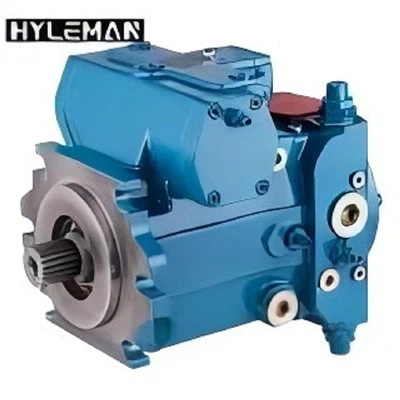
In the realm of hydraulic systems, vane pumps play a pivotal role, interacting with various components to ensure the efficient and smooth operation of the entire system. As a vane pumps supplier, I have witnessed firsthand the intricate relationships between vane pumps and other elements in hydraulic set - ups.
1. Interaction with Reservoirs
The reservoir is the heart of a hydraulic system in terms of fluid storage. Vane pumps draw hydraulic fluid from the reservoir. The reservoir not only provides a sufficient supply of fluid but also helps in dissipating heat generated during the operation of the pump and other components.
When the vane pump starts, it creates a pressure differential that allows it to suck fluid from the reservoir. The design of the reservoir is crucial. It should have a proper baffle system to separate the inlet and outlet areas, preventing the fluid from short - circuiting. This ensures that the vane pump receives clean and cool fluid. For example, if the reservoir is too small, the fluid may heat up quickly, which can lead to reduced efficiency of the vane pump and other components. The vane pump's performance is directly affected by the quality and quantity of fluid in the reservoir. A vane pump may experience cavitation if there is not enough fluid in the reservoir, which can cause damage to the pump's vanes and other internal parts.
2. Interaction with Filters
Filters are essential components in a hydraulic system as they protect the vane pump and other components from contaminants. Vane pumps are sensitive to dirt, debris, and particles in the hydraulic fluid. A high - quality filter installed between the reservoir and the vane pump can remove these contaminants before they reach the pump.
The filter's pore size is carefully selected to balance the need for removing small particles and maintaining an appropriate flow rate. If the filter is too restrictive, it can cause a pressure drop, which may affect the vane pump's performance. On the other hand, if the filter is not fine - enough, contaminants can enter the vane pump, leading to wear and tear of the vanes, rotor, and other internal components. Regular maintenance of the filter, such as changing the filter element at recommended intervals, is necessary to ensure the proper interaction between the vane pump and the filter.
3. Interaction with Valves
Valves are used to control the flow, pressure, and direction of the hydraulic fluid in a system. Vane pumps work in conjunction with various types of valves, such as pressure relief valves, directional control valves, and flow control valves.
Pressure Relief Valves
Pressure relief valves are crucial for protecting the vane pump and the entire hydraulic system from over - pressure. When the pressure in the system exceeds a pre - set value, the pressure relief valve opens, allowing the excess fluid to return to the reservoir. This prevents damage to the vane pump, which may occur if the pressure becomes too high. For example, if the system encounters a blockage or a sudden increase in load, the pressure relief valve will act as a safety mechanism, ensuring that the vane pump does not operate under excessive pressure.
Directional Control Valves
Directional control valves are used to control the direction of the fluid flow. They determine whether the fluid is directed to different actuators in the system. The vane pump supplies the fluid, and the directional control valve decides where the fluid goes. For instance, in a hydraulic cylinder system, the directional control valve can be used to extend or retract the cylinder by controlling the flow of fluid from the vane pump to the cylinder.
Flow Control Valves
Flow control valves regulate the flow rate of the hydraulic fluid. They can be used to adjust the speed of actuators in the system. The vane pump provides the fluid, and the flow control valve modifies the flow rate according to the requirements of the application. For example, in a machine where different operations require different speeds, the flow control valve can be adjusted to control the speed of the actuators, while the vane pump continues to supply the fluid at a relatively constant pressure.


4. Interaction with Actuators
Actuators are the components in a hydraulic system that convert hydraulic energy into mechanical energy. Vane pumps supply the hydraulic fluid under pressure to actuators, such as hydraulic cylinders and hydraulic motors.
Hydraulic Cylinders
In a hydraulic cylinder system, the vane pump provides the fluid pressure to move the piston inside the cylinder. The force exerted by the piston is directly related to the pressure of the fluid supplied by the vane pump. The vane pump must be able to provide a sufficient flow rate and pressure to move the piston at the desired speed. For example, in a heavy - duty lifting application, the vane pump needs to generate enough pressure to lift a large load. The interaction between the vane pump and the hydraulic cylinder is critical for the smooth and efficient operation of the lifting mechanism.
Hydraulic Motors
Hydraulic motors are used to convert hydraulic energy into rotational mechanical energy. The vane pump supplies the fluid to the hydraulic motor, which then rotates a shaft. The speed and torque of the hydraulic motor depend on the flow rate and pressure of the fluid supplied by the vane pump. The vane pump must be sized correctly to meet the requirements of the hydraulic motor. If the vane pump does not provide enough flow or pressure, the hydraulic motor may not operate at its optimal performance.
5. Our Vane Pumps Offerings
As a vane pumps supplier, we offer a wide range of high - quality vane pumps. Our Vane Pumps are designed to provide reliable and efficient performance in various hydraulic applications. We also have the Industrial Denison Hydraulic Double Pumps Series T6 T7 T67, which are known for their high - pressure capabilities and durability. Additionally, our Denison Single Tandem Vane Pump T6crmB033L03B20A1/T6ERM/T6DRM is a popular choice for applications that require precise control and high - performance.
6. Conclusion and Call to Action
The interaction between vane pumps and other components in a hydraulic system is a complex and delicate process. Each component plays a vital role in ensuring the overall performance and reliability of the system. By understanding these interactions, we can design and optimize hydraulic systems to meet the specific needs of different applications.
If you are in the market for vane pumps or need advice on hydraulic system design, we invite you to contact us for a procurement discussion. Our team of experts is ready to assist you in finding the right vane pumps and solutions for your hydraulic system requirements.
References
- Fluid Power Handbook, edited by Jack A. Kosow.
- Hydraulic System Design and Troubleshooting, by Eugene F. Budynas and Richard G. Nisbett.