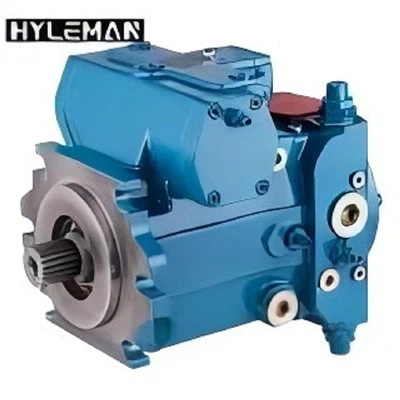
As a trusted supplier of Parker Piston Pumps, I've witnessed firsthand the critical role that hydraulic fluid plays in the performance of these remarkable machines. In this blog, I'll delve into how the type of hydraulic fluid can significantly affect the performance of Parker Piston Pumps, exploring various aspects such as viscosity, additives, and compatibility.
Viscosity: The Key to Smooth Operation
Viscosity is perhaps the most fundamental property of hydraulic fluid when it comes to the performance of a piston pump. It refers to the fluid's resistance to flow, and it has a direct impact on how well the pump can operate.
For Parker Piston Pumps, the right viscosity is crucial. If the hydraulic fluid is too viscous, it can cause excessive resistance within the pump. This means that the pump has to work harder to move the fluid through the system. As a result, there will be increased energy consumption, and the pump may overheat. Overheating can lead to a host of problems, including accelerated wear and tear on the pump components, reduced efficiency, and even potential damage to the seals and other internal parts.
On the other hand, if the hydraulic fluid is too thin (low viscosity), it may not provide adequate lubrication. The pistons, valves, and other moving parts in the pump rely on a thin film of fluid to reduce friction and prevent metal - to - metal contact. Insufficient lubrication can cause rapid wear of these components, leading to decreased pump performance, increased noise levels, and eventually, pump failure.
Parker provides specific viscosity recommendations for its piston pumps based on the operating conditions. For example, in cold environments, a lower - viscosity fluid may be required to ensure that the pump can start up easily and operate smoothly. In contrast, in high - temperature applications, a higher - viscosity fluid may be necessary to maintain proper lubrication and sealing.
Additives: Enhancing Performance and Protecting Components
Hydraulic fluids often contain a variety of additives that are designed to enhance their performance and protect the pump components. These additives can have a profound impact on the operation of Parker Piston Pumps.
One common type of additive is the anti - wear additive. These additives form a protective film on the surfaces of the pump components, reducing friction and wear. In a Parker Piston Pump, where the pistons are constantly moving against the cylinder block and other parts, anti - wear additives are essential for maintaining the integrity of these components over time. They can significantly extend the service life of the pump and reduce the need for frequent maintenance and replacement.
Another important additive is the antioxidant. Oxidation is a natural process that occurs when the hydraulic fluid is exposed to oxygen and high temperatures. Oxidized fluid can form sludge and varnish, which can clog the small passages in the pump, restrict fluid flow, and cause damage to the valves and other components. Antioxidants slow down the oxidation process, keeping the fluid clean and ensuring that the pump operates efficiently.


Corrosion inhibitors are also crucial additives. Hydraulic systems are often exposed to moisture, either through condensation or from the environment. Moisture can cause corrosion of the pump components, leading to pitting, rust, and reduced performance. Corrosion inhibitors form a protective layer on the metal surfaces, preventing moisture from coming into contact with the metal and thus protecting against corrosion.
Compatibility: Ensuring a Harmonious System
Compatibility between the hydraulic fluid and the pump materials is another critical factor. Parker Piston Pumps are made of various materials, including metals, seals, and gaskets. The hydraulic fluid must be compatible with these materials to avoid any adverse reactions.
Some hydraulic fluids may cause swelling or shrinking of the seals and gaskets. If the seals swell, they may not fit properly, leading to leaks. On the other hand, if they shrink, they may also lose their sealing ability. This can result in a loss of pressure within the hydraulic system, reduced pump efficiency, and potential contamination of the fluid.
In addition, certain fluids may react with the metals in the pump, causing corrosion or other forms of damage. For example, some fluids may be acidic or alkaline, which can react with the metal surfaces over time. Parker recommends using fluids that are specifically formulated to be compatible with the materials used in its piston pumps to ensure long - term reliability and performance.
Different Types of Hydraulic Fluids and Their Impact
There are several types of hydraulic fluids available on the market, each with its own characteristics and suitability for different applications.
Mineral - based hydraulic fluids are the most commonly used type. They are relatively inexpensive and offer good lubrication properties. However, they have limited resistance to high temperatures and oxidation. In Parker Piston Pumps used in applications with moderate operating temperatures and normal service conditions, mineral - based fluids can be a cost - effective choice. But in high - temperature or high - stress applications, their performance may be compromised.
Synthetic hydraulic fluids, on the other hand, offer superior performance in terms of temperature resistance, oxidation stability, and anti - wear properties. They can withstand higher temperatures without breaking down, making them ideal for Parker Piston Pumps used in demanding environments such as industrial machinery, construction equipment, and aerospace applications. Although synthetic fluids are more expensive than mineral - based fluids, the improved performance and longer service life can often justify the higher cost.
Biodegradable hydraulic fluids are becoming increasingly popular due to environmental concerns. These fluids are typically made from vegetable oils or other renewable resources. They offer good lubrication and are less harmful to the environment in case of spills. However, their performance may be affected by factors such as water contamination and limited temperature range. For Parker Piston Pumps used in environmentally sensitive areas, biodegradable fluids can be a viable option, but proper maintenance and monitoring are required to ensure optimal performance.
Real - World Examples of Hydraulic Fluid Impact
Let's take a look at some real - world scenarios to illustrate how the choice of hydraulic fluid can affect the performance of Parker Piston Pumps.
In a manufacturing plant, a Parker Bent Axial Piston Pump was initially operating with a mineral - based hydraulic fluid. The pump was running in a relatively high - temperature environment, and over time, the fluid started to oxidize. This led to the formation of sludge and varnish, which clogged the valves and reduced the pump's efficiency. The plant operators noticed increased energy consumption and a decrease in the overall productivity of the machinery. After switching to a synthetic hydraulic fluid with better oxidation resistance, the pump's performance improved significantly. The energy consumption decreased, and the maintenance intervals were extended.
In a construction project, a Parker Bent Axis Piston Pump was used in an excavator. The machine was operating in a cold climate, and the original hydraulic fluid had a high viscosity at low temperatures. This made it difficult for the pump to start up and caused the machine to operate sluggishly. By switching to a low - viscosity hydraulic fluid designed for cold - weather applications, the pump was able to start up quickly, and the excavator's performance improved, allowing the construction work to proceed more efficiently.
Conclusion and Call to Action
In conclusion, the type of hydraulic fluid has a profound impact on the performance of Parker Piston Pumps. From viscosity and additives to compatibility and the specific type of fluid, every aspect needs to be carefully considered to ensure optimal pump operation, long - term reliability, and cost - effectiveness.
As a Parker Piston Pump supplier, I am committed to providing you with the best advice and products to meet your specific needs. Whether you are looking for the right hydraulic fluid for your existing pump or considering upgrading to a new Parker Piston Pump, I can offer you comprehensive solutions.
If you are interested in learning more about Parker Piston Pumps and the appropriate hydraulic fluids for your applications, or if you are ready to start a procurement discussion, please feel free to reach out. I am here to assist you in making the right choices for your hydraulic systems.
References
- Parker Hannifin Corporation. Technical documentation on Parker Piston Pumps.
- Hydraulic Institute. Standards and guidelines on hydraulic fluids and pump performance.
- Industry research reports on hydraulic systems and fluid technology.