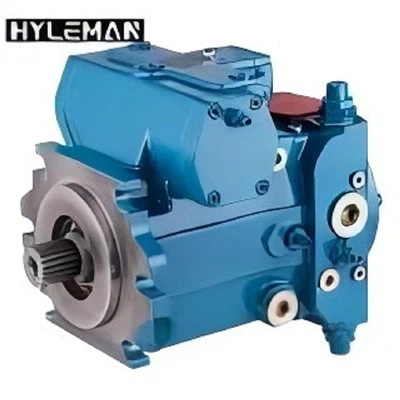
When it comes to industrial applications, the choice of a suitable pump is crucial, especially when dealing with challenging environments. One common query that often surfaces is whether a Vickers Piston Pump can be used in corrosive environments. As a trusted Vickers Piston Pump supplier, I'll delve into this topic to provide a comprehensive answer.
Understanding Vickers Piston Pumps
Vickers Piston Pumps are renowned for their high - efficiency, reliability, and durability. They are widely used in various industrial sectors such as manufacturing, construction, and agriculture. These pumps operate on the principle of positive displacement, where pistons move within cylinders to create a pumping action. This design allows them to generate high pressures, which is essential for many heavy - duty applications.
The basic components of a Vickers Piston Pump include pistons, cylinders, a swash plate, and a drive shaft. The swash plate's angle determines the stroke length of the pistons, which in turn controls the flow rate of the fluid being pumped. This adjustability makes Vickers Piston Pumps highly versatile, as they can be tailored to meet the specific requirements of different applications.
Corrosive Environments: A Challenge for Pumps
Corrosive environments are characterized by the presence of chemicals, acids, or salts that can cause damage to metal components over time. In industries such as chemical processing, marine, and wastewater treatment, pumps are constantly exposed to these corrosive agents. The effects of corrosion on pumps can be severe. It can lead to the degradation of the pump's internal components, such as the pistons, cylinders, and valves. This not only reduces the pump's efficiency but also increases the risk of breakdowns and costly repairs.
When a pump is corroded, its performance may decline significantly. The clearances between moving parts can increase due to material loss, leading to reduced volumetric efficiency. Additionally, corrosion can cause pitting and erosion of the internal surfaces, which can further impair the pump's functionality.
Can Vickers Piston Pumps Handle Corrosive Environments?
The answer is both yes and no. In their standard configuration, Vickers Piston Pumps are typically made of materials such as steel and cast iron, which are susceptible to corrosion in highly corrosive environments. However, with the right modifications and protective measures, they can be used effectively in such settings.
One approach is to use corrosion - resistant materials in the construction of the pump. For example, some components can be made of stainless steel, which offers excellent resistance to a wide range of corrosive substances. Other materials like titanium or certain types of plastics can also be used for specific parts to enhance corrosion resistance.
Another option is to apply protective coatings to the pump's surfaces. These coatings act as a barrier between the metal components and the corrosive environment. Epoxy coatings, for instance, are commonly used due to their high chemical resistance and durability. They can prevent the penetration of corrosive agents and extend the lifespan of the pump.
Case Studies and Real - World Applications
Let's take a look at some real - world examples where Vickers Piston Pumps have been used in corrosive environments. In a chemical processing plant, a Vickers Piston Pump was required to handle a corrosive liquid. The pump was modified by replacing the standard steel components with stainless - steel ones. Additionally, a specialized epoxy coating was applied to the exterior surfaces. As a result, the pump was able to operate continuously for an extended period without significant signs of corrosion, ensuring the smooth operation of the chemical process.
In the marine industry, Vickers Piston Pumps are often used in hydraulic systems. Since seawater is highly corrosive, pumps in this environment need to be protected. Some ships use Vickers Piston Pumps with corrosion - resistant coatings and seals. These modifications have proven to be effective in preventing corrosion and maintaining the performance of the hydraulic systems.
Comparison with Other Pumps
To fully understand the suitability of Vickers Piston Pumps in corrosive environments, it's useful to compare them with other types of pumps. The Parker Permeco P30/31 Cast Iron Gear Pump is a popular choice in many industrial applications. However, its cast - iron construction makes it less suitable for highly corrosive environments compared to a modified Vickers Piston Pump.
The Tractor Hydraulic Piston Pump is designed primarily for agricultural applications. While it may not be exposed to as harsh corrosive conditions as industrial pumps, in some cases where tractors operate in chemically - treated fields or near wastewater, corrosion can still be an issue. Vickers Piston Pumps, with their potential for modification, can offer better corrosion resistance in such scenarios.


The Rexroth Hydraulic Pumps Piston AA10vzo140ez3/10r - Vpb12n00h - S3344 are high - performance pumps, but similar to Vickers Piston Pumps, they may also require modifications for use in corrosive environments. The choice between these pumps often depends on the specific requirements of the application, such as the type and concentration of corrosive agents, the operating pressure, and the flow rate.
Factors to Consider When Using Vickers Piston Pumps in Corrosive Environments
If you're considering using a Vickers Piston Pump in a corrosive environment, there are several factors you need to take into account. First, you need to identify the specific corrosive agents present in the environment. Different chemicals have different levels of corrosivity, and the choice of materials and coatings will depend on this.
The temperature and pressure of the operating environment also play a crucial role. High temperatures can accelerate the corrosion process, and high pressures can cause additional stress on the pump's components. Therefore, the materials and coatings used must be able to withstand these conditions.
Maintenance is another important aspect. Regular inspection and maintenance can help detect early signs of corrosion and prevent major damage. This includes checking the condition of the coatings, replacing worn - out seals, and monitoring the pump's performance.
Conclusion and Call to Action
In conclusion, while standard Vickers Piston Pumps may not be suitable for highly corrosive environments, with appropriate modifications such as using corrosion - resistant materials and applying protective coatings, they can be a reliable choice. These pumps offer high efficiency and versatility, making them a popular option in many industrial applications.
If you're in need of a Vickers Piston Pump for a corrosive environment or have any questions about our products, we're here to help. Our team of experts can provide you with detailed information and guidance on the best solutions for your specific needs. Whether you're involved in chemical processing, marine, or any other industry that requires pumps for corrosive applications, we can work with you to ensure that you get a pump that meets your requirements and performs reliably over the long term.
References
- "Hydraulic Pump Handbook" by Hydraulic Institute
- "Corrosion Engineering and Science" by NACE International
- Technical documents from Vickers Piston Pump manufacturers