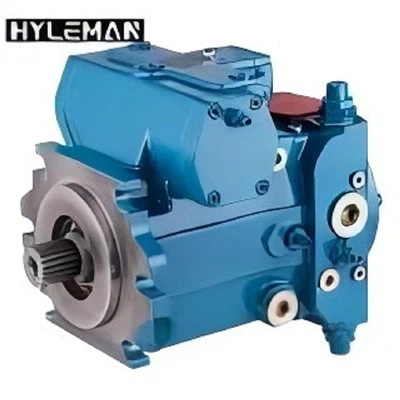
When it comes to fluid power systems, the choice of pump is a critical decision that can significantly impact the overall efficiency, performance, and cost-effectiveness of the operation. Among the various types of pumps available in the market, radial piston pumps stand out as a high-performance option, but how do they stack up against other types of pumps in terms of overall efficiency? As a supplier of Radial Piston Pumps, I am well-positioned to provide an in-depth analysis of this topic.
Understanding Pump Efficiency
Before diving into the comparison, it's essential to understand what pump efficiency entails. Pump efficiency is a measure of how effectively a pump can convert mechanical energy into hydraulic energy, usually expressed as a percentage. A higher efficiency means less energy is wasted in the form of heat, noise, and vibration, resulting in lower operating costs and a more sustainable system. There are two main types of pump efficiency to consider: volumetric efficiency and overall efficiency. Volumetric efficiency measures the ratio of the actual flow rate delivered by the pump to the theoretical flow rate, while overall efficiency takes into account both volumetric and mechanical losses.
Radial Piston Pumps: A High-Efficiency Solution
Radial piston pumps are known for their high-pressure capabilities, precise control, and excellent efficiency. These pumps operate on the principle of positive displacement, where fluid is drawn into the pump chamber and then displaced by the movement of pistons arranged radially around a central shaft. The design of radial piston pumps allows for a high degree of precision and control, making them suitable for applications that require high pressure and accurate flow control, such as industrial machinery, mobile equipment, and aerospace systems.
One of the key advantages of radial piston pumps is their high volumetric efficiency. The close tolerances between the pistons and the pump housing minimize internal leakage, ensuring that the majority of the fluid is delivered to the system. This results in a high actual flow rate relative to the theoretical flow rate, leading to a high volumetric efficiency. Additionally, the design of radial piston pumps allows for smooth and continuous operation, reducing pulsations and vibrations that can cause energy losses.
In terms of overall efficiency, radial piston pumps are also highly competitive. The positive displacement design of these pumps ensures that they can maintain a high efficiency over a wide range of operating conditions, including high pressures and varying flow rates. The mechanical losses in radial piston pumps are relatively low due to the use of high-quality bearings and seals, which minimize friction and wear. As a result, radial piston pumps can achieve high overall efficiencies, often exceeding 90% in optimal operating conditions.


Comparison with Other Types of Pumps
To understand how radial piston pumps compare to other types of pumps in terms of overall efficiency, let's take a closer look at some of the most common pump types:
Gear Pumps
Gear pumps are one of the simplest and most widely used types of pumps. They operate by meshing two gears together, which creates chambers that trap and move fluid from the inlet to the outlet. Gear pumps are known for their simplicity, reliability, and low cost. However, they typically have lower efficiency compared to radial piston pumps.
The main reason for the lower efficiency of gear pumps is their internal leakage. The clearances between the gears and the pump housing are relatively large, which allows some fluid to leak back to the inlet side of the pump. This internal leakage reduces the volumetric efficiency of the pump, resulting in a lower actual flow rate compared to the theoretical flow rate. Additionally, gear pumps can generate significant noise and vibration, which can cause energy losses and reduce the overall efficiency of the system.
Vane Pumps
Vane pumps operate by using vanes that slide in and out of slots in a rotor to create chambers that trap and move fluid. Vane pumps are known for their smooth operation, low noise levels, and moderate efficiency. They are commonly used in applications that require medium pressure and flow rates, such as power steering systems and industrial lubrication systems.
Compared to radial piston pumps, vane pumps generally have lower efficiency. The vanes in vane pumps are subject to wear and tear, which can increase the clearances between the vanes and the pump housing and lead to internal leakage. This internal leakage reduces the volumetric efficiency of the pump. Additionally, vane pumps can experience cavitation at high pressures, which can cause damage to the pump and reduce its efficiency.
Axial Piston Pumps
Axial piston pumps are similar to radial piston pumps in that they are also positive displacement pumps. However, instead of having pistons arranged radially around a central shaft, axial piston pumps have pistons arranged axially along a cylinder block. Axial piston pumps are known for their high power density, high efficiency, and excellent control capabilities. They are commonly used in applications that require high pressure and high flow rates, such as hydraulic presses and construction equipment.
In terms of overall efficiency, axial piston pumps are comparable to radial piston pumps. Both types of pumps have high volumetric efficiencies due to their positive displacement design and low internal leakage. However, the efficiency of axial piston pumps can be affected by factors such as the swashplate angle, which controls the displacement of the pistons. At low swashplate angles, the efficiency of axial piston pumps can decrease due to increased internal leakage and friction.
Applications and Considerations
The choice between radial piston pumps and other types of pumps depends on various factors, including the specific application requirements, operating conditions, and budget. Radial piston pumps are typically the preferred choice for applications that require high pressure, precise control, and high efficiency, such as hydraulic presses, test benches, and marine applications. On the other hand, gear pumps and vane pumps are more suitable for applications that require low to medium pressure and flow rates, such as lubrication systems and power steering systems.
When selecting a pump, it's important to consider not only the initial cost but also the long-term operating costs. A pump with a higher initial cost but better efficiency may result in lower operating costs over the life of the system. Additionally, factors such as maintenance requirements, reliability, and compatibility with the system should also be taken into account.
Conclusion
In conclusion, radial piston pumps offer a high level of efficiency compared to other types of pumps, especially in applications that require high pressure and precise control. Their positive displacement design, low internal leakage, and smooth operation contribute to high volumetric and overall efficiencies. While they may have a higher initial cost compared to some other pump types, the long-term savings in energy consumption and maintenance costs can make them a cost-effective choice.
If you are in the market for a high-efficiency pump for your application, I encourage you to consider our Radial Piston Pumps. Our pumps are designed and manufactured to the highest standards, ensuring reliable performance and excellent efficiency. We also offer a range of other hydraulic pumps, including Danfoss Hydraulic Plunger Pump and Eaton Hydraulic Plunger Pump, to meet your specific needs.
Contact us today to discuss your pump requirements and explore how our products can help you achieve optimal efficiency and performance in your fluid power system.
References
- Hydraulic Pumps and Motors Handbook, Edited by Ian R. Smith.
- Fluid Power Technology, By Anthony Esposito and John H. Herbst.
- Handbook of Hydraulic Fluid Technology, By George E. Totten.